
Exterior painting
Exterior painting on the Sunshine Coast
Everyone else gets a much longer look at your house than you do. And the paint on the outside is doing a job: it stands between the walls and years of Queensland sun, rain and salt.
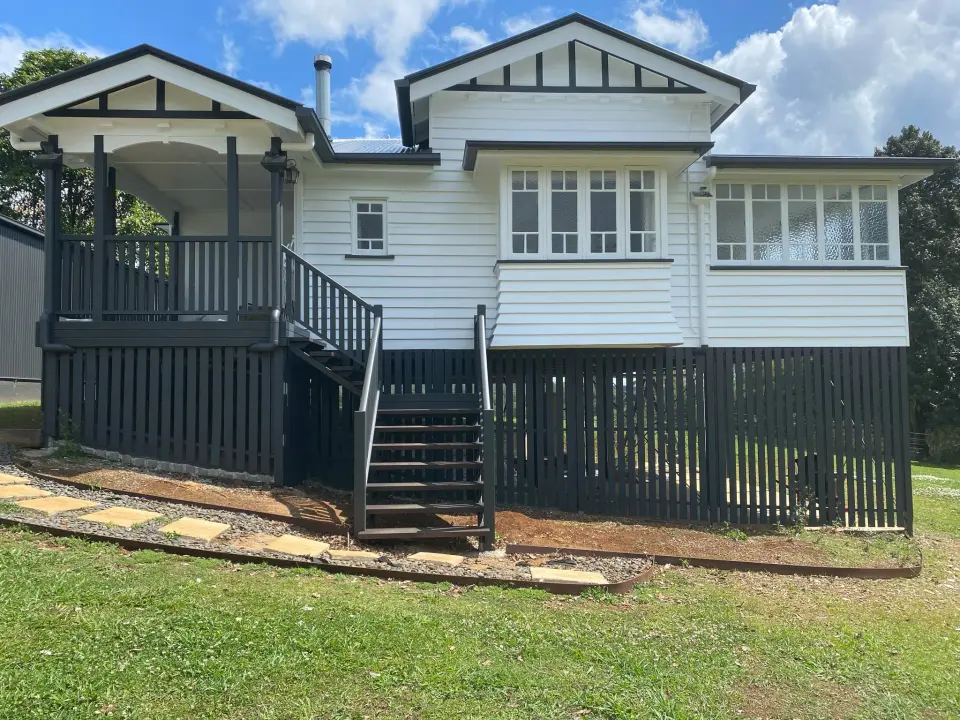
The preparation is the job.
If you take one thing from this page, take this: the coating is the fast part.
Every exterior we repaint starts with a proper wash down. On the Coast a house collects a real layer of dirt, salt film, mould and algae, worst on the shaded southern walls that stay damp after rain. Paint over that has nothing solid to grip, and it lets go early however good the product is. Washing isn’t cosmetic. It’s what makes the paint stick.
Then the rest of the prep: scraping back flaking paint, sanding chalky render, filling cracks, re-sealing gaps around windows where the old sealant has perished, treating rust, and spot priming every bare or repaired patch so the topcoat doesn’t flash. Then, and only then, the paint.


What the Coast does to paint.
Sun
UV breaks the coating down from above, and unevenly. North and west walls cop far more than the south, which is why one side can look fine while another has faded and chalked.
Moisture
Humid mornings, storm season and long damp spells in the shade feed mould and mildew on the cooler walls and under the eaves.
Salt
Near the water, at Marcoola or around Mooloolaba, salt settles on everything and is hard on fixings, fascias and steel. Further inland around Palmwoods it drops away and shade matters more.
Every surface gets its own plan.
- Render and masonry
- A wash, crack repair, and a masonry coating that copes with a bit of movement. Chalky old render gets sanded back or sealed first.
- Weatherboard and timber
- The most preparation of anything, because timber moves and old paint on it fails by flaking. Built before 1970? Older layers may contain lead, which has to be tested before anything is disturbed.
- Fibre cement
- Straightforward when it’s sound. The joins and any damaged edges get attention first.
- Steel and metal
- A protective job more than a decorative one. Rust is treated before coating, and steel is specified to its own standard, AS/NZS 2312.
- Brick
- Brick can be painted, and it looks great done properly. It’s close to a one-way decision, so it’s worth being sure first.
How an exterior job runs.
We walk all four sides
Including the bits you can’t see from the ground. That’s where the quote comes from: the condition of the surfaces, not a square-metre count.
Set up and protect
Gardens, paths, windows, outdoor furniture and air-conditioning units are covered, and access is sorted for the high sections.
Wash, then prep
The part that takes the time.
Coat from the top down
Walls first, then eaves and fascias, then trims, doors and detail, so nothing drips on finished work.
Walk it with you
In daylight, all the way around, before we pack up. Anything you want touched up gets done while we’re still there.
Weather, and how long it takes.
Surfaces have to be dry before coating and the weather settled while it cures, so we plan around the forecast. We’d rather move a day than paint into a front. As a rough guide, a standard single-storey Coast home takes somewhere between a week and two, depending on size, surface and how much prep it needs. Weatherboard takes longer than render, and two storeys longer than one. You get a realistic window at the quote, and if the weather moves it, you hear it from us.
Questions about exterior painting
How often does a house exterior need repainting on the Sunshine Coast?
It depends on exposure, surface and how well the last job was prepared. Sun-facing walls always go first. Rather than quote a set number of years, we’d rather look at your house and tell you what we see.
Do I have to paint the whole house?
No. It’s very common to do two or three sides if the others are still sound. We’ll tell you honestly which need it now and which can wait.
Does the washing come as part of the job?
Yes. We wash and prepare the outside as standard, so you’re not paying to paint over dirt and mould. It’s part of the preparation, not an extra.
Can you paint in summer?
Yes, with planning. Surfaces need to be dry and the weather settled while the coating cures, so we work around the forecast. In storm season, build a little give into the dates.
How many coats do you apply?
Two topcoats over a sound, previously painted surface is the normal standard. Bare, repaired or heavily prepared areas get a primer or sealer first. Big colour changes can need more, and we’ll say so at the quote.
Thinking about the outside of your place?
Doing the roof, or the deck and fences, at the same time? Scope them together: the setup is already done and the whole property ends up on one cycle.